
Days 2-7: Vision should sharpen noticeably, though glare/halos and dryness can come and go. Most people can read, use screens, and do light household tasks. You can shower (keep soapy water out of the eye) and walk or do light exercise. Avoid makeup, dusty/dirty environments, bending with your head below your waist, and lifting >10-15 lb. Many are cleared to drive once vision is comfortable and meets legal standards, get explicit approval at your post-op visit.
Premium Cataract Surgery
Choosing Northwest Eye Surgeons For Cataract Surgery
Cataracts can significantly impact your daily life and visual independence. At Northwest Eye Surgeons, our experienced team of cataract specialists is dedicated to providing you with the most advanced surgical options available, from traditional cataract surgery to premium vision correction procedures.
What is a Cataract?
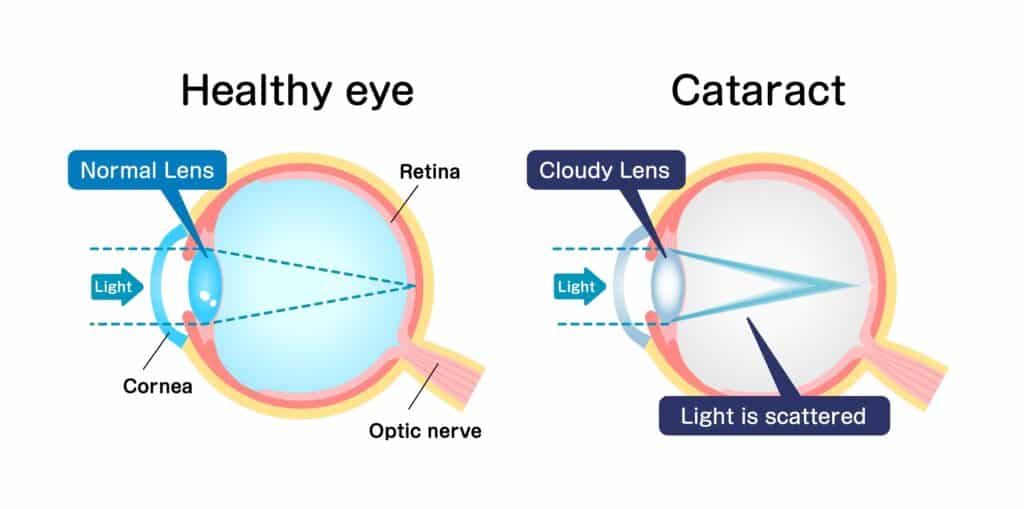
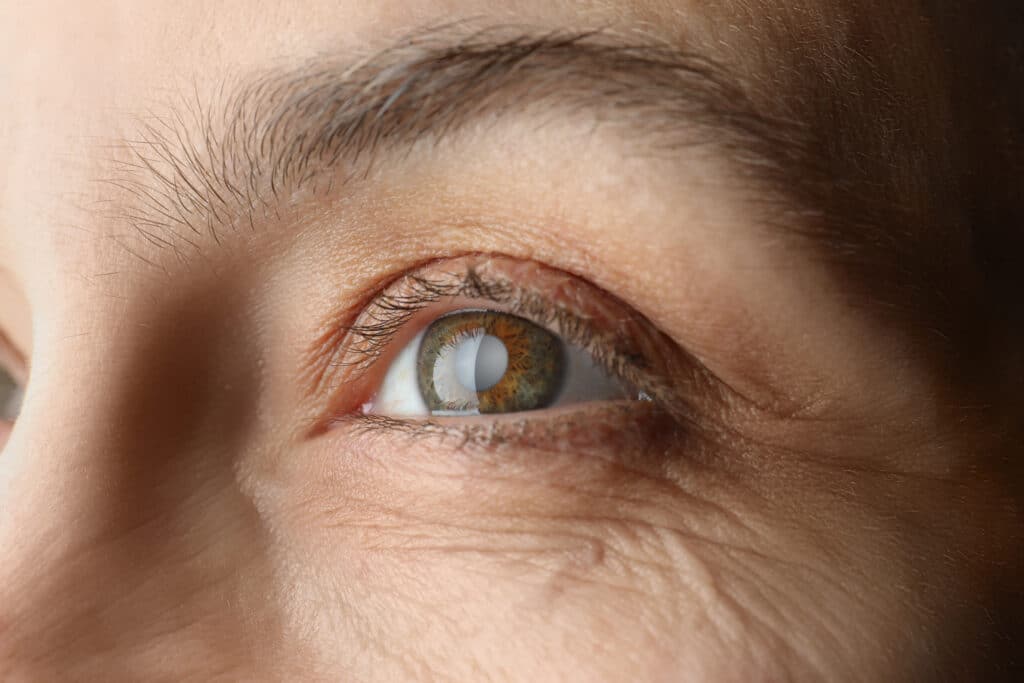
A cataract is an opacification or cloudiness that develops within the natural lens of the eye. Cataract development is a normal part of the aging process, meaning that everyone will eventually experience cataracts at some point in their life if they live long enough.
The lens is a part of the eye that focuses light on the retina, and allows you to see things sharply. The lens also helps to focus your vision at different distances, an ability that decreases with normal aging.
The lens functions best when you are younger because it is crystal clear and is flexible enough to bend, allowing you to focus on objects at various distances away from you. As you age, the lens slowly turns cloudy and yellow, then brown, and sometimes becomes opaque and white. The lens also becomes less flexible, affecting its ability to focus vision on objects.
Cataract Symptoms
Seeing through a cataract is like looking through a window that is never washed. As dirt accumulates, the window loses its clarity, until it is no longer possible to see through it. Similarly, your vision becomes gradually worse as a cataract continues to develop.
If you are experiencing any of the following and are over the age of 60, you may have cataracts:
These symptoms typically develop slowly and may not be noticeable at first.






If you’re experiencing any of these changes in your vision, it’s important to schedule an eye exam with your eye doctor at Northwest Eye Surgeons for proper diagnosis and treatment options.
What Causes Cataracts?
While age is the most common cause, it is not the only cause of cataracts. Trauma or injury to the eye, certain medications such as prednisone or cortisone, and medical conditions such as diabetes and other less common conditions can also cause cataracts to develop earlier in life.
Sometimes, people are even born with cataracts. Cataracts present at birth may be small and harmless or may be large enough to interfere with vision.
Additionally, prolonged exposure to ultraviolet radiation from sunlight and lifestyle factors such as smoking can significantly increase your risk of developing cataracts. Previous eye surgery or inflammation within the eye can also contribute to cataract formation over time.
What is Cataract Surgery?
Cataract surgery is one of the most common and successful surgical procedures performed today, with millions of people undergoing the procedure each year. When cataracts begin to significantly impact your daily activities and quality of life, surgery becomes the most effective treatment option to restore clear vision.
The procedure is an insurance-covered benefit when you can no longer see well enough with glasses to perform everyday activities of daily living. This insurance benefit includes a standard lens implant, allowing individuals to see again with glasses and perform normal daily activities.
Cataract surgery is an outpatient procedure where a cataract surgeon removes the cloudy lens of the eye and replaces it with a clear lens implant.
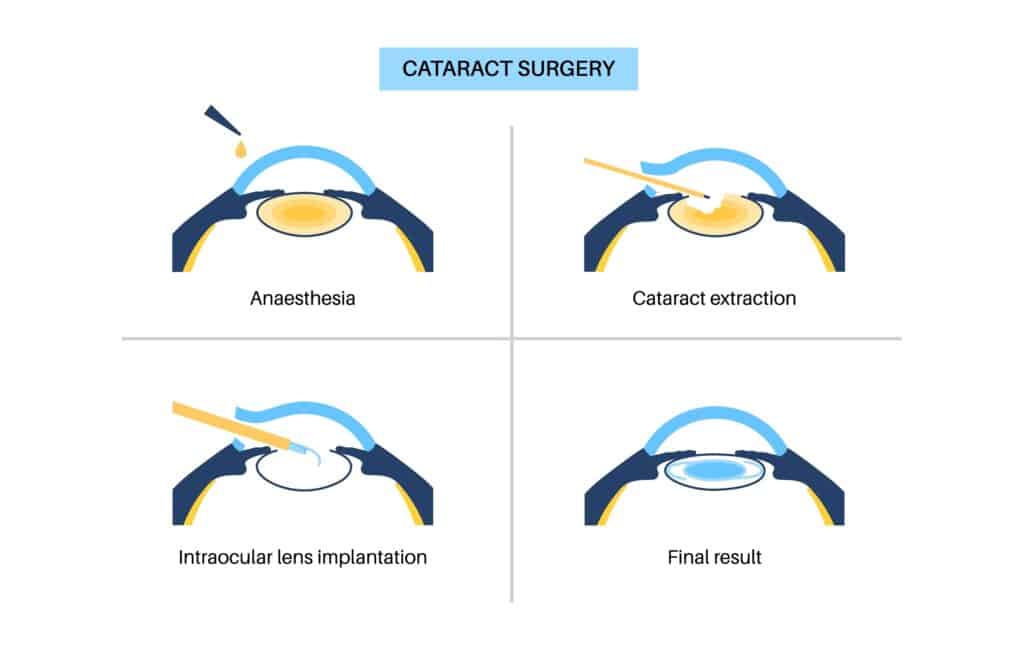
The surgery typically takes less than 30 minutes to complete and is performed using advanced techniques with minimal discomfort. Most patients experience significant improvement in their vision within days of the procedure and can return to most normal activities shortly after surgery.
Candidacy for Cataract Surgery
A great cataract-surgery candidate is someone whose cloudy lens is measurably impairing daily life (reading, night driving, glare, contrast) and who has realistic expectations for vision after surgery. Clinically, they usually have:
- a visually significant cataract confirmed on exam;
- a healthy ocular surface (dry eye/blepharitis treated first) so biometry is accurate;
- clear cornea and adequate endothelial cell function;
- good macular/retinal health (no advanced macular degeneration, uncontrolled diabetic retinopathy, or recent retinal detachment);
- controlled glaucoma and the ability to dilate sufficiently;
- stable systemic health (blood pressure, diabetes) and the ability to lie flat and hold still briefly;
- no active eye infection or inflammation;
- no recent changes that would destabilize measurements (e.g., new contact-lens wear).
Candidates interested in premium IOLs (toric or multifocal) should have regular corneal shape, minimal macular disease, and accept potential trade-offs (e.g., halos). Red flags that may limit success include severe corneal disease, advanced macular/optic-nerve damage, active uveitis, unmanageable alpha-1 blocker–related IFIS risk, or unrealistic “perfect vision at all distances with no glasses” expectations. Before surgery, optimizing dry eye, stopping contact lenses, reviewing medications (blood thinners are usually fine; tell your surgeon about tamsulosin/Flomax), and confirming biometric measurements all increase the odds of an excellent outcome.
Cataract Surgery Risks
Cataract surgery is very safe, but, like any operation, it has risks. The most common short-term effects are temporary blurry vision, light sensitivity, mild pain/foreign-body sensation, and transient eye-pressure spikes. Just make sure to treat dry eye/blepharitis beforehand, pausing contact lenses ahead of measurements, following drop instructions, and avoiding eye rubbing/contamination after surgery. Call your surgeon urgently for increasing eye pain, rapidly worsening vision, new flashes/floaters, or a dark curtain in your vision.
Recovery from Cataract Surgery
Day 0-1: Expect cloudy vision, mild scratchiness, tearing, light sensitivity, and a “pressure” feeling. This usually eases within 24-48 hours. Wear the eye shield while sleeping (typically for a week), use sunglasses outdoors, and start your prescribed drops exactly as directed (often an antibiotic for ~1 week plus anti-inflammatory drops tapered over 2-4 weeks). Do not rub the eye.
Weeks 2-4: Vision continues to settle. You can usually resume makeup after ~1 week and heavier exercise after ~1-2 weeks if your surgeon says it’s okay. No swimming or hot tubs for 2 weeks (some surgeons prefer 3-4). Use preservative-free artificial tears for dryness. If you chose a multifocal/EDOF lens, halos may take weeks to months for your brain to adapt.
1 month and beyond: Final prescription for glasses (if needed) is typically checked 3-4 weeks after your last eye heals. A “film” behind the lens (posterior capsule opacification) can cause blur months to years later and is treated quickly with a YAG laser in the clinic.
Call your surgeon urgently for worsening pain, rapidly decreasing vision, increasing redness, pus-like discharge, new flashes/floaters, or a dark curtain in your vision. These are not typical and need prompt care.
Tips to heal smoother: stick to the drop schedule, keep the eye clean and protected, avoid rubbing/smoke/dust, sleep on the non-operative side the first week if possible, and bring your drop bottles to each follow-up so your team can review your regimen.
How Much Does Cataract Surgery Cost In Seattle?
In Seattle, a realistic “average” for standard cataract surgery (one eye, no premium lens) lands roughly in the $1,900-$3,600 range.
If you’re on Medicare for a standard (monofocal) lens, your cost is typically 20% after the Part B deductible. Elective upgrades in Seattle, like laser-assisted surgery or premium/multifocal/toric lenses, usually add a few thousand dollars per eye out of pocket.
Cataract Surgery with Vision Correction
At Northwest Eye Surgeons, we offer advanced cataract surgery with vision correction for patients who want to reduce their dependence on glasses after their procedure. While standard cataract surgery is designed to restore clear vision that can be corrected with glasses, adding vision correction technology can significantly minimize or even eliminate your need for glasses in many situations.
When you choose cataract surgery with vision correction at Northwest Eye Surgeons, our experienced surgeons utilize cutting-edge technology that can transform your overall visual experience. We use advanced intraocular lenses and state-of-the-art surgical techniques to address multiple vision issues simultaneously, including astigmatism, nearsightedness, farsightedness, and presbyopia (the need for reading glasses).
Compared to standard insurance-covered surgery, our vision correction options provide enhanced precision, expanded range of clear vision at multiple distances, and greater freedom from glasses for daily activities. Our skilled physicians at Northwest Eye Surgeons will work closely with you to evaluate your unique vision needs, lifestyle requirements, and personal preferences to determine the most appropriate advanced surgical approach for achieving your desired visual outcomes.

IOL Options
The choice of intraocular lens (IOL) is a crucial component of your cataract surgery, as it will serve as your eye’s new lens for the rest of your life. At Northwest Eye Surgeons, we offer a comprehensive range of premium IOL options designed to meet different visual needs and lifestyle preferences.

Monofocal
Traditional monofocal IOLs provide excellent vision at one distance, typically set for distance vision. While you’ll likely need reading glasses for close work, these lenses offer sharp, clear vision and are covered by most insurance plans.

Toric
Toric IOLs are specifically designed to correct astigmatism while also addressing cataracts. These lenses can significantly reduce or eliminate the blurred vision caused by astigmatism, providing clearer vision at your chosen focal distance.

Extended Focus
Extended depth of focus (EDOF) lenses provide a continuous range of vision from distance to intermediate activities like computer work. These lenses offer improved vision quality with fewer visual side effects compared to traditional multifocal lenses.

Multifocal
Multifocal IOLs are designed to provide clear vision at multiple distances including near, intermediate, and far, potentially eliminating the need for glasses altogether. These lenses use different zones to focus light at various distances.

Light Adjustable Lens
The Light Adjustable Lens (LAL) is a revolutionary technology that allows your surgeon to fine-tune your vision after surgery using UV light treatments. This customizable approach ensures optimal visual outcomes tailored specifically to your individual needs and preferences.
Posterior Capsulotomy (YAG Laser Capsulotomy)
What are secondary cataracts?
After successful cataract surgery, some patients may notice their vision becoming cloudy again months or even years later. This condition is commonly referred to as a “secondary cataract,” though it’s not actually a new cataract forming. Instead, it’s a clouding of the lens capsule that was left in place during the original surgery.
When your surgeon removes the cloudy natural lens during cataract surgery, part of the front (anterior) capsule that holds the lens is removed, while the clear back (posterior) capsule remains intact to support your new intraocular lens. For many patients, this posterior capsule remains clear permanently, causing no vision problems.
However, in 30 to 50 percent of people, the posterior capsule gradually loses its clarity over time. This clouding can develop within months or years after the initial cataract surgery, causing vision to become blurry or hazy once again. When this occurs, a simple laser procedure called a posterior capsulotomy can restore clear vision.
A posterior capsulotomy is a quick, painless outpatient procedure that uses a specialized YAG laser to create a small opening in the clouded capsule. The actual laser procedure takes only about five minutes to complete and requires no incisions or recovery time.
Most patients experience an immediate improvement in vision clarity, with the procedure effectively restoring the sharp, clear vision they enjoyed immediately after their original cataract surgery.
Take the Next Step Toward Clearer Vision
Don’t let cataracts continue to limit your daily activities and quality of life. At Northwest Eye Surgeons, we’re committed to helping you regain the clear, vibrant vision you deserve through personalized cataract treatment options that fit your lifestyle and visual goals.
Whether you’re experiencing early cataract symptoms or are ready to explore advanced vision correction options, our experienced team is here to guide you through every step of your journey.
Ready to see clearly again? Schedule a cataract evaluation at Northwest Eye Surgeons in Seattle, WA, today!